The NEPSE pre-open session: does a big opening jump last?

Every morning before 11:00 a few NEPSE stocks print a price in the pre-open session, and investor groups jump on it: "opened 4% up - it is going to fly today." We checked the NEPSE pre-open price against what actually happened next, using every minute of trading in the 40 most-traded stocks from 2023 to October 2026. The answer is clear and the opposite of what most people expect: a big pre-open jump almost always fades during the day.
What the pre-open session is
Before continuous trading starts at 11:00, NEPSE runs a short pre-open session: orders are collected and matched at a single opening price for the stocks where buyers and sellers meet. It is meant to give the day a fair starting point. In practice very little trades there: across our sample, the pre-open carried only about 0.17% of a stock's daily turnover, and only about one stock-day in five had any pre-open trade at all. A handful of orders can set a price far from where the real market will be an hour later.
What the data shows
We took 6,676 stock-days with pre-open trades and compared the pre-open price with the previous close (the "gap") and with the close of the same day.
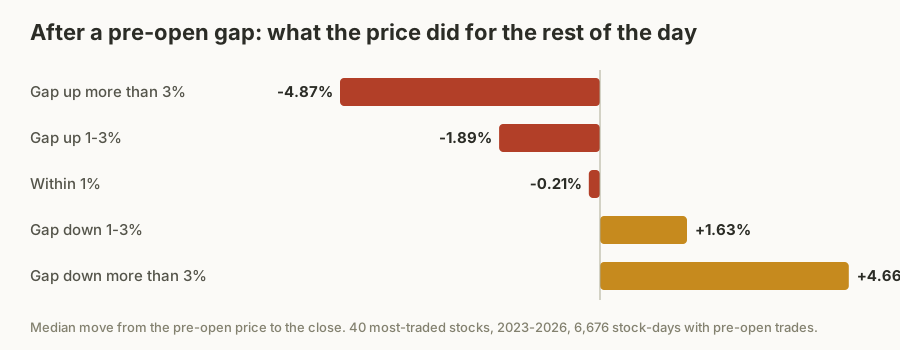
| Pre-open price vs yesterday's close | Times | Price reversed during the day | Median, pre-open to close |
|---|---|---|---|
| Up more than 3% | 379 | 98% | -4.9% |
| Up 1-3% | 2,958 | 80% | -1.9% |
| Within 1% | 1,308 | 60% | -0.2% |
| Down 1-3% | 1,598 | 82% | +1.6% |
| Down more than 3% | 433 | 99% | +4.7% |
Two things stand out. First, the pre-open price told you almost nothing about the day: after a big gap up, the stock still finished the day higher only 40% of the time. Second, anyone who bought at a high pre-open price usually paid too much - the price came back down within hours in almost every case. The same was true in reverse for big gaps down.
Why it happens
The pre-open is thin. With so few orders, one eager buyer can print a price several percent above yesterday's close. When continuous trading opens, the full market arrives and the price settles where most buyers and sellers agree - usually close to where it was the day before. The pre-open price is less a forecast than a reflection of who placed an order at 10:30.
Domestic case study: the hype morning
The pattern is strongest on days with news - a dividend announcement, a rumour in a Facebook group, a big bonus share. Those mornings bring the highest pre-open prints and the deepest fades: in our data the 379 mornings with a gap of more than 3% finished, from the pre-open price, a median 4.9% lower. If you are tempted to place an order at whatever price it takes before 11:00, you are the order that sets that high print.
Global case study: why big exchanges use opening auctions
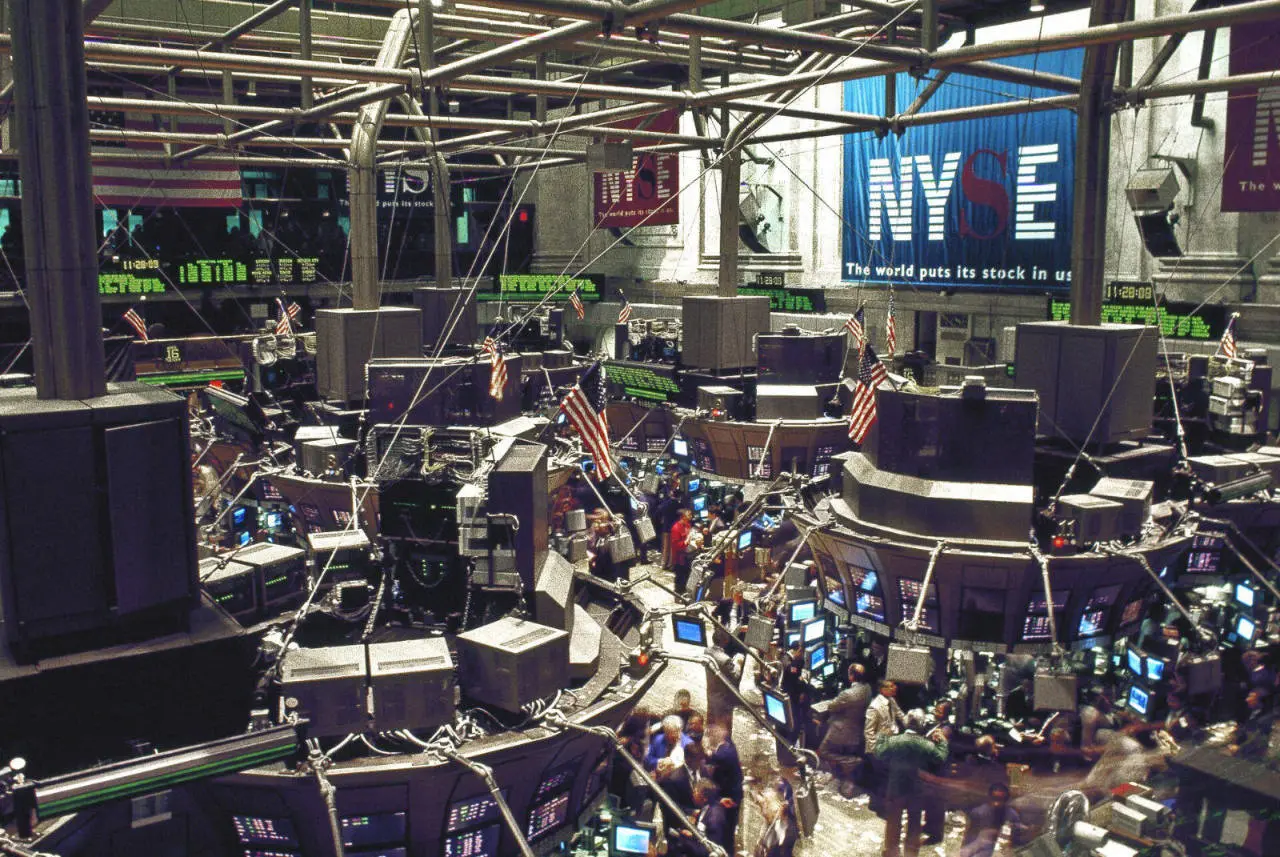
Large markets learned this long ago. India's NSE and BSE introduced a pre-open call auction in 2010 precisely because the first minutes of continuous trading were erratic, and the New York Stock Exchange opens most stocks through an auction run by its designated market makers. Even there, research on opening prices shows the first price of the day is the noisiest - prices tend to drift back as the day's real volume comes in. NEPSE's pre-open is far thinner than those auctions, so the effect is stronger.
What this means for you
- Do not chase a pre-open jump. Over three years it reversed almost every time.
- Use limit orders. Decide the price you are willing to pay; let the opening noise come to you.
- Wait for real volume. The first half hour after 11:00 tells you more than the pre-open does - see when the volume actually comes in our post on NEPSE trading hours.
- Watch the minutes yourself. Our free NEPSE chart shows 1-minute candles, pre-open trades included.
This is research on past prices, not investment advice. Past patterns can change.
Source: MacroLens NP analysis of 1-minute NEPSE trade data for the 40 most-traded stocks, January 2023 - October 2026. Chart: MacroLens NP. Cover photo: Carol M. Highsmith, Library of Congress, via Wikimedia Commons, public domain.